Geography, Altitude and Harvest
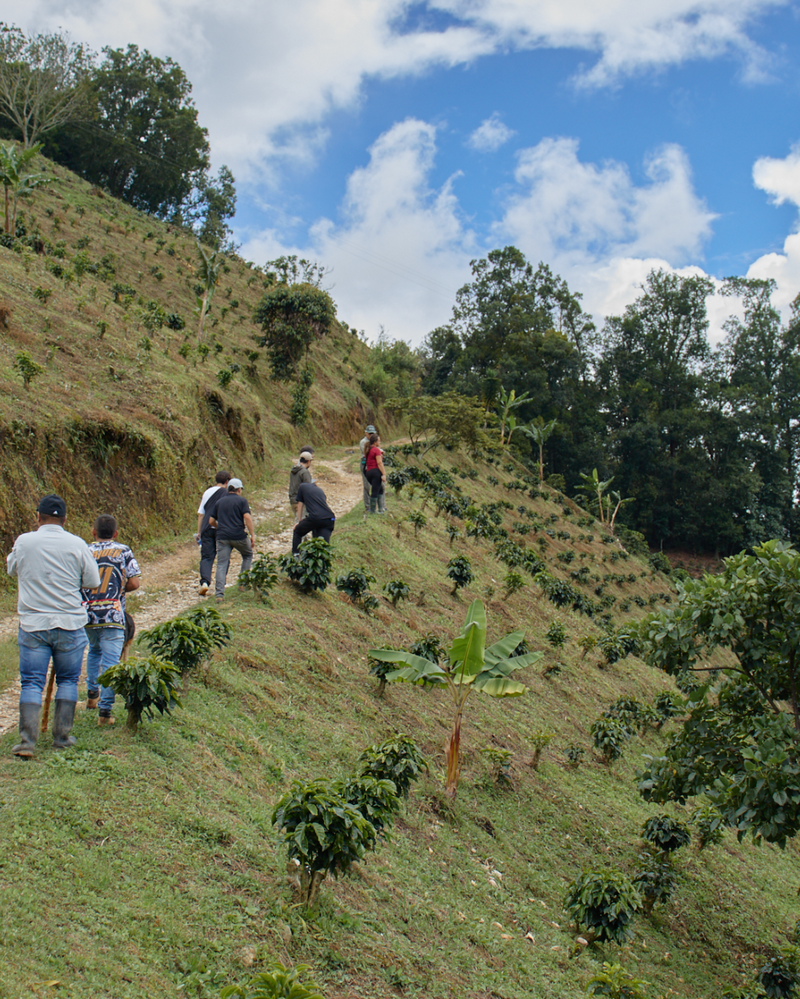
The Serranía del Perijá is the northernmost extension of Colombia's Eastern Andes, running north to south along the international border with Venezuela. To its west, across the broad valley of the Río Cesar, stands the Sierra Nevada de Santa Marta — a massif geologically independent from the Andes and the highest coastal mountain range in the world, reaching 5,700 metres. The two systems have contrasting lithologies: the Sierra Nevada is composed of igneous and metamorphic formations; the Perijá of sedimentary and volcanosedimentary rock. Between them, the CesarRanchería intermontane basin concentrates the hydrological and agricultural life of the region. Coffee in the Serranía del Perijá is cultivated between 800 and 1,800 metres above sea level — data recorded in the Colombian National Coffee Census (Ecotopo 301A, 1980–81). Annual rainfall is 1,300 to 1,600 mm, with defined dry periods from December through March and again in July and August. Soils are sedimentary — arcillites, sandstones and limestones — with moderate to low natural fertility and slopes from moderate to very inclided. At this latitude — between 9° and 11° North — elevations of 700 to 1,500 metres are agronomically equivalent to high-grown elevations in Central American coffee regions. At these northern latitudes, the Serranía del Perijá and the Sierra Nevada produce a single annual harvest, concentrated from October/November through January/February. As in the Nariño region of southern Colombia, there is no second or mitaca crop. The growing cycle is complete and well defined: harvests in the north occur during the second semester; in the south, during the first.
The Origin:
How Coffee Arrived Here The documented history of coffee in the Serranía del Perijá begins in the 1840s with a single French immigrant. François Dangond arrived on Colombia's Caribbean coast around 1840 and settled in Villanueva, on the northern slope of the Perijá in what the Department of La Guajira is today. By 1855, he had planted eighty hectares on his farm El Toro — over one hundred thousand coffee plants, consistent with the traditional Typica density under full shade of 1,200 to 1,400 trees per hectare. By 1880, the port of Riohacha was exporting 250 tonnes of coffee from Villanueva and its surroundings. The variety was Typica, propagated from Martinique and Guyana in the early eighteenth century and transmitted through Venezuela into northeastern Colombia. Dangond's Finca El Toro, like the large estates then being established on the Sierra Nevada de Santa Marta — haciendas such as Jirocasaca, La Victoria and Cincinnati — was an extensive, capitalized operation, constrained by the limited availability of local labor with experience in largescale coffee production. Workers were hired from the interior, mainly from regions with a tradition of smaller-scale coffee farming. This northern Caribbean frontier was, in its structure, closer to the plantation economy of El Salvador or Guatemala than to the smallholder culture that would later define Colombia's international identity in coffee. That plantation model did not endure. The large estates gradually fragmented or declined, unable to sustain the labor organization and capital intensity they required. What persisted — and what eventually defined the productive character of the Perijá — was the smallholder. Workers who had arrived as hired labor on the larger farms, and later a new wave of colonists from Colombia's interior coffee regions, settled their own parcels on the mountain slopes. This is the pattern that the Colonización Antioqueña had already demonstrated further south along Colombia's central and eastern cordilleras: small family farms, organized around community councils and the Federation's extension network, proved more resilient over time than any plantation structure. The Perijá's coffee identity today is the product of those smallholders, not of the estates that preceded them.
The Peoples of the Mountain
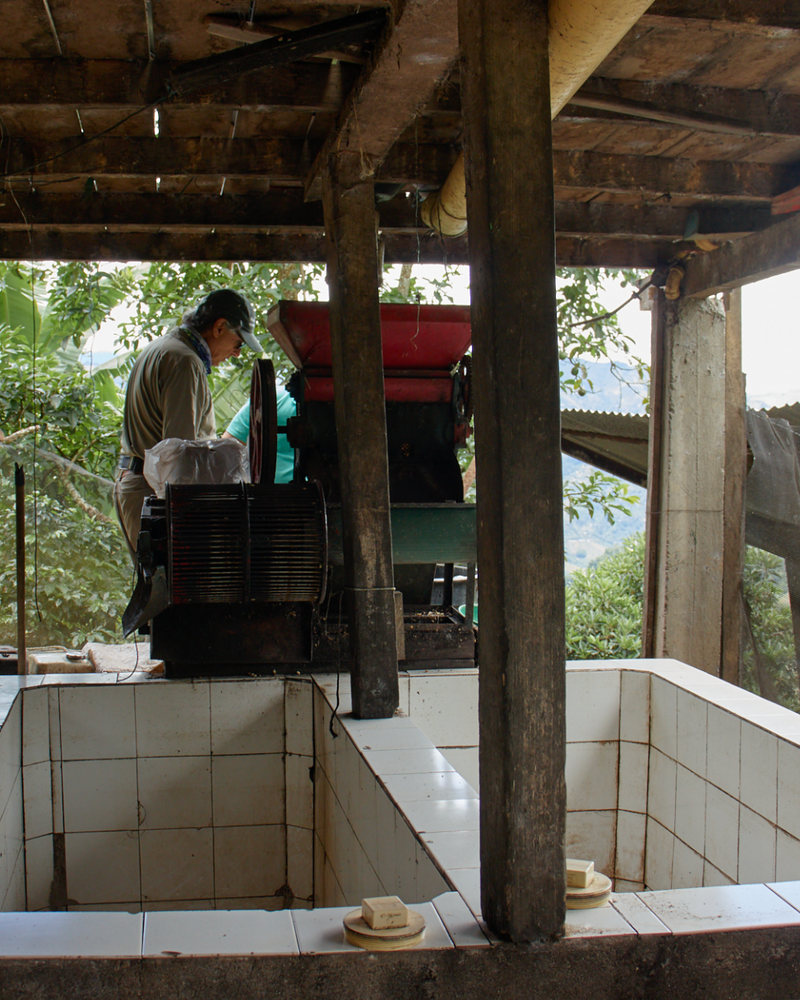
The Serrania del Perijá is the ancestral territory of the Yukpa, a Carib-language people whose historical range extended from the Río Cesar in the west to Lake Maracaibo in Venezuela — precisely the 700-to-1,500-metre elevation band where coffee grows in this region. As a new wave of settlers arrived from the interior coffee regions in the 1940s and advanced into the middle slopes, the Yukpa were displaced progressively toward the higher, less fertile ground. They did not benefit from the coffee economy built on their ancestral land. What followed was cumulative: displacement by agricultural colonization, then by the marijuana trade that moved through the mountain corridor in the 1970s, then by guerrilla and paramilitary forces competing for territory from the 1980s through the early 2000s. Today the Yukpa occupy six resguardos in Cesar totaling approximately 34,000 hectares — a fraction of their original territory, in arid upper reaches where productive agriculture is barely viable. The campesino colonists who arrived from Colombia's interior beginning in the late 1940-50s were themselves displaced persons. Fleeing the political violence known as La Violencia, families from Tolima, Valle del Cauca, Antioquia and Santander moved into the Perijá carrying the agricultural knowledge of Colombia's traditional coffee belt. They brought wet-process beneficio and shade cultivation to a new frontier they entered without full understanding of who had lived there before them. Between the 1950s and the 1980s, this wave of internal migration placed the Serranía del Perijá firmly within Colombia's specialty coffee geography.
Conflict, Recovery and the Current Cultivar
By the end of the 1980s, armed conflict had intensified in the Perijá and Sierra Nevada corridors. In 2002, the farming families of five Cesar municipalities — Becerril, Chiriguaná, Curumaní, La Jagua de Ibirico and Agustín Codazzi — were collectively displaced. Farms were abandoned. Cafetales aged without harvest or management. Between 2009 and 2012, the Federación Nacional de Cafeteros, through its Comité Cesar-Guajira, executed a recovery programme in alliance with the Government of Cesar, the Dutch Ministry for Development Cooperation and the Douwe Egberts Foundation. Six hundred families returned to their farms across many veredas. The programme renewed 863 hectares of productive cafetales, recovered an additional 1,508 hectares through pruning, cleaning and fertilization, and established 994 hectares of subsistence food crops. By 2012, farms were producing with international sustainability certifications, and the Federación Nacional de Cafeteros had begun promoting Serranía del Perijá coffee in recognition of the region's renewed productive capacity and distinct cup quality. The renovation replaced approximately eighty percent of the aged Typica and Caturra cafetales with Castillo Pueblo Bello — the regional variant of the Castillo cultivar (Coffea arabica L.) developed by Cenicafé specifically for the growing conditions of Magdalena, Cesar, La Guajira and Norte de Santander. Its genetic base is the cross of Caturra and Timor Hybrid, providing durable resistance to coffee leaf rust (Hemileia vastatrix) within a compact, productive plant architecture. The variety is calibrated to the specific precipitation patterns, soil chemistry and temperature regime of this northern corridor.


![Cold Brew Fairfield Dark [Dark Roast]](http://kurasu.live/cdn/shop/files/image_Beans_Fairfield-Dark-coldbrew_2048x.jpg?v=1779932788)
![Cold Brew Fairfield Dark [Dark Roast]](http://kurasu.live/cdn/shop/files/FairfieldDark_701f9d76-5d3c-4a30-a750-2a4552014f0e_2048x.jpg?v=1779857158)
![Cold Brew Fairfield Dark [Dark Roast]](http://kurasu.live/cdn/shop/files/FairfieldDark-100_dc99232e-f466-4136-b873-c1299e5033c0_2048x.jpg?v=1779857186)
![Cold Brew Fairfield Dark [Dark Roast]](http://kurasu.live/cdn/shop/files/image_Beans_Fairfield-Dark-coldbrew_set_2048x.jpg?v=1779932801)
![Cold Brew Fairfield Dark [Dark Roast]](http://kurasu.live/cdn/shop/files/0704_blog_coldbrew__22_1_2048x.jpg?v=1779857169)